




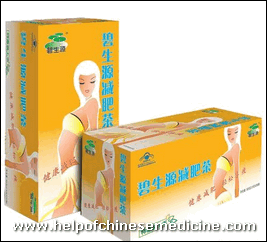
Keep out of reach from children.
Do not use during pregnancy.
The net weight is 50g, 2.5g* 20 sachets per box
Slimming tea Bishengyuan for weight loss is one of the most popular weight loss product on Chinese market recently.
We can guarantee that the natural products from ShenYi Center of Chinese Medicine are 100% authentic and our prices are competitive in comparison to other herbal stores.
We ship via Hong Kong post.
Paypal and credit cards accepted. Most of the orders areshipped within 24 hours.
Please contact us for any enquiries:
info (at) helpofchinesemedicine.com


- Chinese Medicine for cardiovascular diseases and heart
- Chinese Medicine for gastro-intestinal disorders (poor appetite, indigestion, gastritis, diarrhea)
- Chinese Medicine for men (prostatitis, impotence etc.)
- Chinese Medicine for women (gynecological conditions, pre-menstrual syndrome, infertility)
- Chinese Medicine for liver syndromes (fatty liver, hepatitis)
- Chinese Medicine skin diseases (swelling, eczema, psoriasis)
- Chinese Medicine for asthma, bronchitis, chronic coughs
- Chinese Medicine for rheumatism, arthritis, osteoarthritis
- Chinese Medicine for hypertension
- Chinese Medicine for allergies
- Chinese Medicine for common cold and flu, sore throat
- Chinese Medicine for pain relieve
- Chinese Medicine for fatigue syndrome
- Chinese Medicine for weight loss
Effectiveness of green tea on weight loss in obese Thais: A randomized, controlled trial.
Auvichayapat P, Prapochanung M, Tunkamnerdthai O, Sripanidkulchai BO, Auvichayapat N, Thinkhamrop B, Kunhasura S, Wongpratoom S, Sinawat S, Hongprapas P.
Department of Physiology, Faculty of Medicine, Khon Kaen University, 40002, Thailand.
This study was undertaken to investigate the effects of green tea on weight loss in obese Thais. A randomized, controlled trial involving 60 obese subjects (body mass index, BMI > 25 kg/m2) was conducted. All subjects consumed a Thai weight loss diet containing 3 meals (8373.6 kJ/day) for 12 weeks, prepared by the Nutritional Unit at Srinagarind Hospital. The weight loss diet contained 65% carbohydrates, 15% protein, and 20% fat. Body weight, BMI, body composition, resting energy expenditure, and substrate oxidation were measured at baseline, and during weeks 4, 8, and 12 of the study. Serum levels of leptin and urine VMA were measured at baseline and during the 12th week. Differences over time and between the weight loss treatments (green tea or placebo) over time were determined using two-factor ANOVA with repeated measures. In comparing the two groups, differences in weight loss were 2.70, 5.10, and 3.3 kg during the 4th, 8th, and 12th weeks of the study, respectively. At the 8th and 12th weeks of the study, body weight loss was significantly different (P < 0.05). At the 8th week, the difference in resting energy expenditure was 183.38 kJ/day (P < 0.001), the difference in the respiratory quotient was 0.02 (P < 0.05), and no significant differences existed in satiety score, food intake, or physical activity. Urine VMA was significantly different in the 12th week of the study (P < 0.05). We conclude that green tea can be effective weight loss in obese Thai subjects by increasing energy expenditure and fat oxidation. A mixture of extracts of black and green teas and mulberry leaf did not reduce weight gain in rats fed a high-fat diet.
Fallon E, Zhong L, Furne JK, Levitt M.
Research Service (151), Minneapolis Veterans Affairs Medical Center.
Tea extracts are used in many over-the-counter preparations claiming to promote weight loss. The rationale for this usage includes reports that weight loss green tea extract increases thermogenesis, and extracts of green and black tea and mulberry leaf inhibit the digestion/absorption of carbohydrate and fat. The investigators in this study tested the potential of increasing doses of a weight loss mixture of three extracts (50-percent black tea, 20-percent green tea, and 30-percent mulberry) to induce weight loss, steatorrhea, and blood lipid alterations in rats ingesting a high-fat diet, ad lib. The weight loss mixture was incorporated into chow in quantities of 0.5-, 3.0-, and 6.0 percent by weight; a control group received only chow. Food intake and weight loss were monitored daily, and quantitative fecal fat measurements were obtained weekly for four weeks. The 3.0- and 6.0-percent chows significantly increased fecal fat excretion to 15 percent of dietary fat intake (controls: 5 percent); however, no significant reduction in weight loss was observed. After four weeks of weight loss treatment, the 3.0- and 6.0-percent dosages were associated with significant reductions in serum triglycerides and increases in high-density lipoprotein (HDL) cholesterol. However, these chow concentrations were associated with significant increases in serum ALT, and the 6.0-percent chow markedly increased serum alkaline phosphatase. This weight loss study does not provide support for the utility of this combination of black tea, green tea, and mulberry extracts in weight-loss regimens and indicates that high doses of this extract combination may be hepatotoxic.
The effects of epigallocatechin-3-gallate on thermogenesis and fat oxidation in obese men: a pilot study.
Boschmann M, Thielecke F.
Universitary Medicine Berlin, Charite Campus Buch, Franz-Volhard-Center for Clinical Research, D-13125, Berlin, Germany.
OBJECTIVES: The development of obesity is characterized by an increase in adipose tissue mass and by concomitant and profound changes in almost all organ functions leading to diseases such as hypertension, diabetes mellitus and coronary heart disease. Recent data from human studies indicate that the consumption of green tea and green tea extracts may help weight loss, mainly body fat, by increasing postprandial thermogenesis and fat oxidation. However, human studies investigating the metabolic effects of the most predominant tea catechin, EGCG, alone are absent. METHODS: In a randomized double blind, placebo-controlled, cross-over pilot study, six overweight men were given weight loss 300 mg EGCG/d for 2d. Fasting and postprandial weight loss changes in energy expenditure (EE) and substrate oxidation were assessed. RESULTS: Resting EE did not differ significantly between EGCG and placebo treatments, although during the first postprandial monitoring phase, respiratory quotient (RQ) values were significantly lower with weight loss EGCG compared to the placebo. CONCLUSIONS: These findings suggest that weight loss EGCG alone has the potential to increase fat oxidation in men and may thereby contribute to the weight loss effects of green tea. However, more studies with a greater sample size and a broader range of age and BMI are needed to define the optimum dose for weight loss.
Green tea extract thermogenesis-induced weight loss by epigallocatechin gallate inhibition of catechol-O-methyltransferase.
Shixian Q, VanCrey B, Shi J, Kakuda Y, Jiang Y.
South China Institute of Botany, Chinese Academy of Sciences, Guangzhou, China.
Epidemiological studies have shown that intake of weight loss tea catechins is associated with a lower risk of cardiovascular disease. The antioxidative activity of weight loss tea-derived catechins has been extensively studied. Reports have shown that weight loss green tea extract intake is associated with increased weight loss due to diet-induced thermogenesis, which is generally attributed to the catechin epigallocatechin gallate. That weight loss catechin-polyphenols are known to be capable of inhibiting catechol-O-methyltransferase (the enzyme that degrades norepinephrine) is a possible explanation for why the weight loss green tea extract is effective in stimulating thermogenesis by epigallocatechin gallate to augment and prolong sympathetic stimulation of thermogenesis. Knowledge about thermogenesis-induced weight loss produced by green tea's epigallocatechin gallate and its ability to inhibit catechol-O-methyltransferase is important for health benefits and for prolonging the action of norepinephrine in the synaptic cleft.
Availability of weight-loss supplements: Results of an audit of retail outlets in a southeastern city.
Sharpe PA, Granner ML, Conway JM, Ainsworth BE, Dobre M.
Prevention Research Center, Arnold School of Public Health, University of South Carolina, 921 Assembly St, Columbia, SC 29208, USA.
The sale of nonprescription weight-loss products accounts for millions of dollars spent by Americans trying to lose weight, yet there is little evidence for effectiveness and there are multiple safety concerns. The purpose of this study was to determine what weight loss products, and ingredients within products, were available at retail outlets in a metropolitan area. A purposive sampling strategy identified 73 retail outlets. An audit form was used to collect information from product labels. The audit identified 402 products containing 4,053 separate weight loss ingredients. The mean number of ingredients per product was 9.9+/-8.96 (range = 1 to 96). A database search was conducted regarding evidence for effectiveness, safety precautions, and side effects for the 10 ingredients that appeared most often across products. Modest evidence of weight loss effectiveness exists for green tea (Camellia sinensis), chromium picolinate, and ma huang (Ephedra major). For the remaining seven (ginger root [Zingiber officinale], guarana [Paullinia cupana], hydroxycitric acid [Garcinia cambogia], white willow [Salix alba], Siberian ginseng [Eleutherococcus senticosus], cayenne [Capsicum annuum], and bitter orange/zhi shi [Citrus aurantium]), inadequate or negative weight loss evidence exists. Although precautions and contraindications were found for all 10 ingredients, the strongest concerns in the literature appear for ma huang, bitter orange, and guarana. Our audit revealed numerous weight-loss products available to consumers, yet there is little evidence to support the effectiveness of the top 10 ingredients identified and many potential adverse reactions; therefore, food and nutrition professionals should discuss dietary weight loss supplement use with their clients.
Potential applications for alternative weight loss medicine to treat obesity in an aging population.
Cherniak EP.
Division of Geriatrics and Gerontology, Miller School of Medicine, University of Miami and the Miami VA Health Care System. Correspondence address: Room 1D200, Miami VA Medical Center, 1201 NW 16 Street, Miami, FL 33125.
Obesity is a growing problem causing significant morbidity and mortality. The efficacy of conventional therapies is limited. Numerous alternative therapies are advocated for weight loss, including dietary modifications, hypnotherapy, and acupuncture. Many herbal medications and weight loss dietary supplements such as conjugated linoleic acids, chitosan, Garcinia cambogia, and Citrus aurantium, are also being used. Most have been tested in very limited trials. None have been evaluated to the extent they can be definitively recommended, nor have they been studied to ascertain the extent of potential hazards. Given the scope of the problem, and the potential risk to a vulnerable population, further research should be conducted to define the efficacy of these weight loss treatments, particularly for the elderly.
Dietary supplements in weight reduction.
Dwyer JT, Allison DB, Coates PM.
Office of Dietary Supplements, National Institutes of Health, Bethesda, Maryland 20892, USA.
We summarize evidence on the role of dietary supplements in weight reduction, with particular attention to their safety and benefits. Dietary supplements are used for two purposes in weight reduction: (a) providing nutrients that may be inadequate in weight loss diets and (b) for their potential benefits in stimulating weight loss. The goal in planning weight-loss diets is that total intake from food and supplements should meet recommended dietary allowance/adequate intake levels without greatly exceeding them for all nutrients, except energy. If nutrient amounts from food sources in the reducing diet fall short, dietary supplements containing a single nutrient/element or a multivitamin-mineral combination may be helpful. On hypocaloric weight loss diets, the addition of dietary supplements providing nutrients at a level equal to or below recommended dietary allowance/adequate intake levels or 100% daily value, as stated in a supplement's facts box on the label, may help weight loss dieters to achieve nutrient adequacy and maintain electrolyte balance while avoiding the risk of excessive nutrient intakes. Many botanical and other types of weight loss dietary supplements are purported to be useful for stimulating or enhancing weight loss. Evidence of their efficacy in stimulating weight loss is inconclusive at present. Although there are few examples of safety concerns related to weight loss products that are legal and on the market for this purpose, there is also a paucity of evidence on safety for this intended use. Ephedra and ephedrine-containing supplements, with or without caffeine, have been singled out in recent alerts from the Food and Drug Administration because of safety concerns, and use of weight loss products containing these substances cannot be recommended. Dietitians should periodically check the Food and Drug Administration Web site ( www.cfsan.fda.gov ) for updates and warnings and alert patients/clients to safety concerns. Dietetics professionals should also consult authoritative sources for new data on efficacy as it becomes available ( ods.od.nih.gov ).
Common dietary supplements for weight loss.
Saper RB, Eisenberg DM, Phillips RS.
Harvard Medical School, Boston, Massachusetts, USA.
Over-the-counter weight loss dietary supplements to treat obesity appeal to many patients who desire a "magic bullet" for weight loss. Asking overweight patients about their use of weight-loss supplements and understanding the evidence for the efficacy, safety, and quality of these supplements are critical when counseling patients regarding weight loss. A schema for whether physicians should recommend, caution, or discourage use of a particular weight-loss supplement is presented in this article. More than 50 individual dietary supplements and more than 125 commercial combination products are available for weight loss. Currently, no weight-loss supplements meet criteria for recommended use. Although evidence of modest weight loss secondary to ephedra-caffeine ingestion exists, potentially serious adverse effects have led the U.S. Food and Drug Administration to ban the sale of these weight loss products. Chromium is a popular weight-loss supplement, but its efficacy and long-term safety are uncertain. Guar gum and chitosan appear to be ineffective; therefore, use of these products should be discouraged. Because of insufficient or conflicting evidence regarding the efficacy of conjugated linoleic acid, ginseng, glucomannan, green tea, hydroxycitric acid, L-carnitine, psyllium, pyruvate, and St. John's wort in weight loss, physicians should caution patients about the use of these supplements and closely monitor those who choose to use these products.
Use of nonprescription dietary supplements for weight loss is common among Americans.
Blanck HM, Serdula MK, Gillespie C, Galuska DA, Sharpe PA, Conway JM, Khan LK, Ainsworth BE.
Division of Nutrition and Physical Activity, Centers for Disease Control and Prevention, Atlanta, GA 30341, USA.
OBJECTIVE: Dietary supplements are not recommended as part of a weight-loss program due to concerns about efficacy and safety. This study sought to assess prevalence and duration of nonprescription weight-loss supplement use, associated weight-control behaviors, discussion of use with a health care professional, and specific ingredient use. PARTICIPANTS AND DESIGN: Adults aged > or =18 years (n=9,403) completed a cross-sectional population-based telephone survey of health behaviors from September 2002 through December 2002. STATISTICAL ANALYSES PERFORMED: Both chi2 and t tests were conducted for categorical and mean comparisons and multiple variable logistic regression was used to determine significant predictors. RESULTS: An estimated 15.2% of adults (women 20.6%, men 9.7%) had ever used a weight-loss supplement and 8.7% had past year use (women 11.3%, men 6.0%); highest use was among women aged 18 to 34 years (16.7%). In regression models, use was equally prevalent among race/ethnic groups and education levels. One in 10 (10.2%) of users reported > or =12 month use, with less frequent long-term use in women (7.7%) than men (15.0%), P=0.01. Almost one third (30.2%) of users discussed use during the past year; 73.8% used a supplement containing a weight loss stimulant including ephedra, caffeine, and/or bitter orange. CONCLUSIONS: Use of supplements for weight loss seems to be common among many segments of the US adult population. Many adults are long-term users and most do not discuss this practice with their physician. Most of the weight-loss supplements taken contain stimulants. Qualified professionals should inquire about use of supplements for weight loss to facilitate discussion about the lack of efficacy data, possible adverse effects, as well as to dispel misinformation that may interfere with sound weight-management practices.
This is the page of Chinese slimming tea for weight loss, you can also buy Chinese Slimming Bishengyuan Tea for weight loss online here.
