
Chinese Medicine for blood and heart                                                                                                                                           

ShenYi Center of Chinese Medicine
神医草药中心

Original Chinese Medicines directly from China
  

Natural Patent Chinese Formulas

Home < Chinese medicine for heart and blood diseases


Here you can find

Chinese medicine

for heart problems,

 blood diseases:

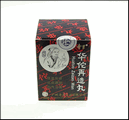
Hua Tuo Zai Zao Wan

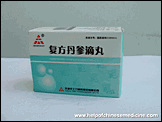
Fufang Danshen Diwan

Xiao Ke Wan

 Huatuo Zaizao pills are a pure natural preparation from plant origins for treating and preventing cardisovascular and cerebrovascular diseases and apoplexy and hemiplegia, stroke, poor blood circulation, numbness, stiffness in one's limb, difficulty speaking or deviating of eyes and mouth.
Huatuo Zaizao pills improve the immunologic function of the body and tolerance of the brain tissue to hypoxia during acute cerebral ischemia, to protect the function andfigure of the nervous cells in hypoxia.
Dosage: 8 g (about 45-50 pills) each time orally and twice or 3 times daily, bottle contains 80 g
Manufacturer: Guangzhou Qixing Pharmaceuticals Co. Ltd.

Read more about Huatuo Zaizao Wan


chinese medicine for blood circulation
  
Buy
 
Huatuo Zaizao Wan
 Online
$6.95


Danshen Pills, Fufang Danshen Diwan in Chinese, will be helpful to people with heart and blood vessels disorders and everyone over 50 years old.

Known in ancient Chinese medicine for generations, this important medicine is widely used for the treatment of cardiovascular diseases including chest pain, heart attacks, ischemic stroke and myocarditis, inflammation of heart, stagnation of blood.

Providing blood circulation improvement, Danshen pills also have immune enhancing properties.
Take it daily to have a strong healthy heart and normal blood flow at any age.

Dosage: To be sucked or taken orally, 10 pills each time, 3 times a day
Contains 150pills
Manufacturer: Tianjin Tasly Pharmaceutical Co., Ltd.

 Read more about Danshen pills


Buy Danshen Online
$5.95


Xiaoke Wan is proved to be highly effective with small dosage and few side effect and is especially effective for incipient, mild moderate and stable cases of diabetes mellitus in which the pancreas is still partially functioning.
Since its quality is stable and its effectiveness is definite, this preparation was awarded “Famous Trade Brand Product” by Guangdong Province in 1996.

Dosage: 5-10 pills before meals, 2-3 times per day or by medical order, contains 120 pills
Manufacturer: Guangzhou Zhongyi

CAUTION : This product contains glibenclamide.

Read more about Xiao Ke Wan


xiao ke wan
 
Buy
Xiao Ke Wan
 Online
$5.95


1.Chinese Medicine for  cardiovascular diseases, heart and blood vessels problems 
2.Chinese Medicine for gastro-intestinal disorders (poor appetite, indigestion, gastritis, diarrhea)
3.Chinese Medicine for men (prostatitis, impotence etc.)
4.Chinese Medicine for women (gynecological conditions,
pre-menstrual syndrome, infertility)

5.Chinese Medicine for liver syndromes (fatty liver, hepatitis,  cirrhosis)
6.Chinese Medicine skin diseases (swelling, eczema, psoriasis)

7.Chinese Medicine for asthma, bronchitis, chronic coughs
8.Chinese Medicine for rheumatism, arthritis, osteoarthritis
9.Chinese Medicine for hypertension
10.Chinese Medicine for allergies
11.Chinese Medicine for common cold and flu, sore throat
12.Chinese Medicine for pain relieve
13.Chinese Medicine for fatigue syndrome
14.Chinese Medicine for weight loss


Chinese medicine for heart syndromes, cardiovascular diseases research
Preclinical and clinical examinations of Salvia miltiorrhiza and its tanshinones in ischemic conditions.
Adams JD, Wang R, Yang J, Lien EJ.
Department of Molecular Pharmacology and Toxicology, School of Pharmacy, University of Southern California, 1985 Zonal Avenue, Los Angeles, CA 90089-9121, USA.
Salvia miltiorrhiza (Labiatae, Laminaceae), danshen, is an annual sage mainly found in China and neighboring countries. The crude drug (dried root) and its preparations are currently used in China to treat patients suffering from heart attack, angina pectoris, stroke and some other conditions. The use of S. miltiorrhiza has been increasing in the management of stroke. Pharmacological examinations showed that the plant and its active ingredients, tanshinones and salvianolic acids, have anticoagulant, vasodilatory, increased blood flow, anti-inflammatory, free radical scavenging, mitochondrial protective and other activities. This review discusses the pharmacology, medicinal chemistry and clinical studies published, especially in China, for danshen and tanshinone preparations. Clinical examinations are evaluated in terms of S. miltiorrhiza preparation, dose, double blinding, control, clinical assessments of outcomes and other parameters. Meta-analyses of S. miltiorrhiza are also discussed.

Quality control of Cordyceps sinensis, a valued traditional Chinese medicine
S.P. Lia, , , F.Q. Yanga and Karl W.K. Tsimb
aInstitute of Chinese Medical Sciences, University of Macau, Taipa, Macau SAR, China
bDepartment of Biology and Biotechnology Research Institute, The Hong Kong University of Science and Technology, Clear Water Bay Road, Hong Kong, China
Cordyceps sinensis, a well-known and valued traditional Chinese medicine for heart syndromes, is also called DongChongXiaCao (winter worm summer grass) in Chinese. It is commonly used to replenish the kidney and soothe the lung for the treatment of fatigue, night sweating, hyposexualities, hyperglycemia, hyperlipidemia, asthemia after severe illness, respiratory disease, renal dysfunction and renal failure, arrhythmias and other heart disease, and liver disease. As the rarity and upstanding curative effects of natural Cordyceps, several mycelial strains have been isolated from natural Cordyceps and manufactured in large quantities by fermentation technology, and they are commonly sold as health food products in Asia. In addition, some substitutes such as Cordyceps militaris also have been used and adulterants also confused the market. Therefore, quality control of C. sinensis and its products is very important to ensure their safety and efficacy. Herein, markers and analytical methods for quality control of Cordyceps were reviewed and discussed.

Angiogenesis: from plants to blood vessels
Tai-Ping Fana, , Ju-Ching Yeha, b, Kar Wah Leungc, Patrick Y.K. Yued and Ricky N.S. Wongc, d
aAngiogenesis and Traditional Chinese Medicine Laboratory, Department of Pharmacology, University of Cambridge, Cambridge CB2 1PD, UK
bDepartment of Obstetrics and Gynaecology, The Rosie Hospital, University of Cambridge, Cambridge CB2 2SW, UK
cDepartment of Biology, Science Faculty, Hong Kong Baptist University, Hong Kong
dHung Lai Ching Laboratory of Biomedical Science, R&D Division, School of Chinese Medicine, Hong Kong Baptist University, Hong Kong
Angiogenesis is a major pathological component of diseases such as cancer and coronary heart disease. Although major advances have been made and encouraging clinical results obtained, safer and more effective approaches are required. The identification of new drugs from plants has a long and successful history, and certain proangiogenic and antiangiogenic plant components have been used in traditional Chinese medicine (TCM) for thousands of years. Similar to Western combination therapy, TCM uses mixtures of plant extracts, termed fufang, to maximize efficacy and minimize adverse effects or toxicity. More evidence-based research and chemical optimization of these compounds could further enhance the effectiveness of these plant-based medicines in angiotherapy.

Traditional Chinese Medicine and heart disease: what does Western medicine and nursing science know about it?
Patricia Davidsona, b, Karen Hancocka, Dominic Leungc, Esther Angd, Esther Changa, David R. Thompsone and John Daly, , a
a School of Nursing, Family and Community Health (SNFCH), College of Social and Health Sciences (CSHS), University of Western Sydney, Sydney, Australia
b Western Sydney Area Health Service, Sydney, Australia
c Cardiology Department, Liverpool Hospital, South Western Sydney Area Health Service, Sydney, Australia
d Cardiology Department, The St. George Hospital, South East Health Service, Sydney, Australia
e The Nethersole School of Nursing, The Chinese University of Hong Kong, Hong Kong, PR China
BACKGROUND: Interest in Traditional Chinese Medicine (TCM) is growing rapidly beyond China. This interest is driven by a combination of factors including recognition of potential benefits of TCM; dissatisfaction with the traditional Western medical model; an increasing commitment to holistic care and increasing evidence for the interaction of psychological factors and outcomes of disease and treatment and health consumer demand. AIMS: This review article was prompted by the need to understand and interpret the increasing trend towards the use of Traditional Chinese Medicine in heart disease. In particular, this article defines and describes TCM, and analyses implications and challenges for Western health care delivery models. LITERATURE SEARCH: This article provides a review of accessible evidence, to English speaking health care professionals. The CINAHL, MEDLINE, HealthSTAR, Academic ASAP and Cochrane databases were searched, identifying literature published from 1982. Search engines on the Internet were also used. Examples of keywords used were ‘Traditional Chinese Medicine’ and ‘heart’. CONCLUSION: Difficulties in accessing information regarding TCM have implications for health education in coronary heart disease and patient safety. The rapid uptake of TCM in both Western and Chinese societies mandates an understanding of the principles and potential interactions when TCM is complemented with Western medical treatment for heart disease. Development of this knowledge and understanding is essential in order to provide safe and effective health care to patients who use combination therapies.

The Jing-Mai connections of the Heart
Jesse Li-Ling,
Institute of Bioinformatics, Life Science Building, Room 218, Tsinghua University, Beijing 100084, China
Background: The Jing-Mai (variously translated as the Channel, Vessel or Meridians), as described by traditional Chinese medicine, probably exists and has represented the connections between various parts of human body during embryonic development. According to the Chinese theories, there are 14 major Jing-Mai within the human body, of which four are directly connected with the Heart. Methods: The described paths of the four Jing-Mai were compared with features of congenital syndromes involving particular types of congenital heart defects. Results: Specific correlation seem to exist between such four Jing-Mai and known developmental mechanisms underlying various congenital heart defects: the Kidney Jing-Mai—ectomesenchymal tissue migration abnormalities; the Spleen Jing-Mai—situs and looping defects; the Heart Jing-Mai—abnormal cell death; the Small Intestine Jing-Mai (and the Heart Jing-Mai)—extracellular matrix anomalies. Conclusions: The Chinese theories seem to provide some intriguing insights into the pathogeneses of congenital heart defects. The Jing-Mai seems to distinguish from, but nevertheless have a close relationship with the blood vessels. Utilization of the Jing-Mai will probably enable a better understanding and development of new treatments for cardiovascular diseases.

Study on mechanism of action of Chinese medicine Chan Su: dose-dependent biphasic production of nitric oxide in trophoblastic BeWo cells
Md. Baidul Alam Bhuiyana, Michael E. Fantb and Amitava Dasguptaa, ,
a Departments of Pathology and Laboratory Medicine, University of Texas-Houston Medical School, 6431 Fannin, MSB 2.292, Houston, TX 77030, USA
b Department of Pediatrics, University of Texas-Houston Medical School, Houston, TX, USA
Background: Chan Su, a traditional Chinese medicine, is used for treating the heart diseases and other systemic illnesses. Our studies with animal model have revealed its role in increasing intracellular calcium concentration in cardiomyocytes. Nitric oxide (NO), a second messenger molecule, and its metabolites have been demonstrated to maintain and modulate multiple physiologic functions including the cardiovascular and reproductive systems. In order to explore the mechanism of action of Chan Su, we studied the ability of Chan Su to stimulate NO production in cultured trophoblastic BeWo cells. Materials and methods: BeWo cell is a cloned established cell line purified from human choriocarcinoma. These cells have some similarities in biological behavior with endothelial cells. Therefore, BeWo cell line may act as a model system for production of nitric oxide by Chan Su both in placenta and in cardiovascular tissue, and the results can easily be extrapolated to cardiomyocytes. Very small amount of ethanol extract of Chan Su was added to the cultured cells in KBM buffer and a chemiluminescence system was used for the measurement of nitric oxide. The amounts of Chan Su extract added to cultured cells were comparable to expected level of Chan Su in human serum after ingestion. We also repeated these experiments with bufalin, the active component of Chan Su. Results: The ethanol extract of Chan Su (5 and 10 μg/ml) significantly increased NO production up to 110% of basal control value, but higher concentrations (40 and 80 μg/ml) of Chan Su (as expected in an overdose) resulted in decreased NO production below the control level. This biphasic effect on nitric oxide production was also observed with bufalin, the active component of Chan Su responsible for its digoxin-like immunoreactivity. The presence of bufalin in Chan Su preparation was confirmed by thin layer chromatography (TLC) analysis. Conclusions: Chan Su as well as bufalin is able to modulate the production of NO in BeWo cell line. Thus, it can be efffective as chinese medicine for heart diseases.

Benefits, adverse effects and drug interactionsof herbal therapies with cardiovascular effects
Georgianne Valli MD and Elsa-Grace V. Giardina MD, FACC
Division of Cardiology, Department of Medicine, and the Center for Women's Health, Columbia University, New York, New York, USA
Because the use of herbal therapies in the U.S. is escalating, it is essential to be aware of clinical and adverse effects, doses and potential drug-herb interactions. A consumer poll in 1998 indicated that one-third of respondents use botanical remedies, and nearly one in five taking prescription medications also used herbs, high-dose dietary supplements or both. An estimated 15 million adults are at risk for potential adverse interactions involving prescription medications and herbs or vitamin supplements, yet most practicing physicians have little knowledge of herbal remedies or their effects. Herbal products are marketed without the proof of efficacy and safety that the Food and Drug Administration (FDA) requires of drugs. The Dietary Supplement and Health Education Act of 1994 allocates responsibility to manufacturers for ensuring safety and efficacy with no specific requirements to submit documentation. Manufacturers may state a product's physiologic effects but may not make claims for the treatment or cure of specific diseases. Consumers and practitioners have little information about product safety, contraindications, interactions or effectiveness and are reliant on manufacturers to provide accurate labeling. Recently, the growing number of foods with herbs has raised concerns at the FDA, which requires evidence that food additives are safe. Considering that the growing appeal of herbal remedies is likely to continue, physicians, particularly cardiologists, must become familiar with the available cardiovascular information on herbs. This review highlights the existing data on the efficacy, adverse effects and interactions for herbal therapies that impact on the cardiovascular system.

Protective effects of Mu-Fang-Ji-Tang against myocardial injury in a murine model of congestive heart failure induced by viral myocarditis
Wei Zhong Wang, Akira Matsumori, , Yoshiki Matoba, Shigeo Matsui, Yukihito Sato, Toshiro Hirozane, Tetsuo Shioi and Shigetake Sasayama
Department of Cardiovascular Medicine, Kyoto University, Japan
The effects of Mu-Fang-Ji-Tang (TJ-36), a traditional Chinese herbal medicine, were studied in a murine model of congestive heart failure induced by viral myocarditis. In the group of animals treated with Mu-Fang-Ji-Tang in a dose of 1.5g/kg/day, the heart weight to body weight ratio was significantly lower than in the control group (p< 0.01). Histopathological grades were also significantly lower in the Mu-Fang-Ji-Tang treated group than in the placebo group (p< 0.05). Furthermore, survival was increased in the Mu-Fang-Ji-Tang treated group, versus the control group (p< 0.05). In vitro, murine J774A.1 macrophages inoculated with encephalomyocarditis virus produced a significantly greater amount of nitrites compared to non-activated macrophages. Mu-Fang-Ji-Tang added to the cells (25, 50, 75, 100 μg/ml) concomitantly with the encephalomyocarditis virus inhibited nitrite formation in a concentration-dependent manner. Mu-Fang-Ji-Tang, Chinese medicine for heart diseases, showed a protective effect against myocardial injury leading to congestive heart failure in this animal model.

Pharmacological activity of cardiovascular agents from herbal medicine.
Ho JW, Jie M.
Department of Biochemistry, The Chinese University of Hong Kong, Shatin, Hong Kong.
Some of the active phytochemicals in herbal medicine are finding therapeutic use. For example, patients with heart disease are reported to benefit from treatment with herbal medicine with fewer side effects. Previous studies showed the inhibitory effects of tetramethylpyrazine, an active component of medicinal herb, on phosphodiesterase that is associated with heart disease and the cardio-protective effects of other herbal medicine that was used to protect ischemia-reperfusion injury of rat hearts. Individual herbal medicines show antipyretic, analgesic and anti-inflammatory and anti-cancer effects. In addition to sharing many therapeutic activities, the active components of herbal medicine are also used in nutrient supplement for cardiovascular disease. Numerous in vitro studies of herbal medicine on different cell lines and in vivo study of herbal medicine have been reported. However, the mechanism of actions remains unclear. The present review aims to give an overview of the recent development of herbal medicine in treatment of cardiovascular disease, and covers the possible mechanism of action of some of active principles. The study will provide insights into drug action and demonstrate the therapeutic benefits of herbal medicine for the treatment of cardiovascular disease.

Shengmai, a traditional herbal Chinese medicine for heart failure.
Chen J, Wu G, Li S, Yu T, Xie Y, Zhou L, Wang L.
Huaxi Hospital, Sichuan University, Clinical Epidemiology and Evidence-Based Medicine, Guo Xue Xiang 37#, Chengdu, Sichuan, China, 610041.
BACKGROUND: Heart failure is a major public health problem world-wide. Shengmai (a traditional Chinese herbal medicine) has long been used as a complementary treatment for heart failure in China. OBJECTIVES: To determine the effect (both benefits and harms) of shengmai plus usual treatment versus usual treatment alone for heart failure. SEARCH STRATEGY: We searched the following electronic databases: the Cochrane Central Register of Controlled Trials (CENTRAL) on The Cochrane Library (Issue 2, 2005), MEDLINE (1966 to May 2005), EMBASE (1984 to March 2004), AMED (1985 to July 2005), Chinese BioMedical Literature Database(1978 to April 2004), DARE (Issue 2, 2005) and BIOSIS (1997 to 2004). Seventeen Chinese journals were also handsearched. SELECTION CRITERIA: Trials of shengmai plus usual treatment versus usual treatment alone for heart failure were included. Randomized or quasi-randomized controlled trials, regardless of whether they were blinded, were included. DATA COLLECTION AND ANALYSIS: Two reviewers selected trials, assessed methodological quality and extracted data independently. Dichotomous and continuous data were calculated as relative risk (RR), and weighted mean differences (WMD), respectively. No heterogeneity was detected between included trials. A fixed-effect model was used to perform meta-analysis. MAIN RESULTS: Nineteen trials were included studies. Methodological quality of the included studies was low. Compared to usual treatment alone, shengmai plus usual treatment showed significant improvement in New York Heart Association classification of clinical status (RR 0.32; 95% CI 0.25 to 0.40), mortality (RR 0.25; 95% CI 0.07 to 0.86), and tumour necrosis factor-alpha (WMD -0.52; 95% CI -0.99 to -0.05). Improvements were also seen in hemodynanic tests (one trial, 100 participants). No adverse affects were reported in any of the included trials. AUTHORS' CONCLUSIONS: It is possible that shengmai plus usual treatment may be beneficial compared to usual treatment alone for heart failure. However the evidence is weak because of the poor quality of the included trials. Long-term and high quality studies are needed to provide clear evidence for the future use of shengmai.

Chinese herbal medicine, Shengmai San, is effective for improving circulatory shock and oxidative damage in the brain during heatstroke.
Wang NL, Liou YL, Lin MT, Lin CL, Chang CK.
Institute of Physiology, National Yang-Ming University Medical School, Taipei, Taiwan.
The aim of this study was to investigate the effect of Shengmai San (SMS), a traditional Chinese herbal medicine, on heatstroke-induced circulatory shock and oxidative damage in the brain in rats. Anesthetized rats were exposed to a high ambient temperature (43 degrees C) to induce heatstroke. After the onset of heatstroke, the values of mean arterial pressure, cerebral perfusion pressure, cerebral blood flow, and brain partial pressure of O(2) were all significantly lower than those in normothermic controls. However, the values of intracranial pressure, brain and colonic temperatures, and brain levels of free radicals, lipid peroxidation, and cellular ischemia and damage markers were all greater in heatstroke rats compared with those of normothermic controls. Pretreatment or post-treatment with SMS significantly reduced the hypotension, intracranial hypertension, cerebral hypoperfusion and hypoxia and increased levels of ischemia and damage markers in the brain during heatstroke. The protective effects exerted by SMS pretreatment is superior to those of SMS post-treatment. The results demonstrate that SMS is effective for prevention and repair of circulatory shock and ischemic and oxidative damage in the brain during heatstroke.

Clinical observation on 51 patients of acute myocardial infarction treated with thrombolytic therapy combined with Chinese herbal medicine
Li G, Qi W, Xiong K.
Guang'anmen Hospital, China Academy of TCM, Beijing, China.
OBJECTIVE: To assess the efficacy of thrombolytic therapy combined with Chinese herbal medicine (CHM) in treating acute myocardial infarction (AMI). METHODS: One hundred and one cases of AMI were divided randomly into two groups. The treated group treated with thrombolytic therapy combined with CHM and the control group treated with thrombolytic therapy alone. The criteria of patency of coronary artery were conducted according to the referential standard of thrombolytic therapy in treating AMI introduced by Chinese Angiocardiopathy Medical Journal, 1991. RESULTS: The patency rate of coronary artery of the two groups were 68.63% and 56.00%, the four-week mortality 3.92% and 10.00%, hemorrhage occurrence 1.96% and 10.00%, congestive heart failure occurrence 5.88% and 16.00%, severe arrhythmia occurrence 11.76% and 22.00%, and the shock occurrence 3.92% and 8.00% respectively. The difference between the two groups was significant, P < 0.01, P < 0.05. CONCLUSION: The effect of the treated group was better and the complication occurrence of the treated group was lower than those of the control group.

Clinical study on relationship among Heart-Qi Deficiency, left ventricular function and myocardial ischemia in patients with coronary heart disease
Wang S, Zhao M, Lu X.
Dongzhimen Hospital, Beijing University of TCM, Beijing 100700.
OBJECTIVE: To study the relationship among Heart-Qi Deficiency (HQD), left ventricular function and myocardial ischemia in patients with coronary heart disease (CHD). METHODS: Doppler echocardiogram, electrocardiogram were used to observe 103 patients of CHD clinically. Patients of stable angina pectoris treated with Radix Codonopsitis Pilosulae (50 cases) or Nifedipine (20 cases) were observed as well. RESULTS: Occurrence of left ventricular function insufficiency, both systolic and diastolic, was higher in CHD patients of HQD type as compared with that of non-HQD type. The left ventricular diastolic function showed high susceptibility (87%) and the left ventricular systolic function showed high specificity (88%) for HQD evaluation. Radix Codonopsitis Pilosulae could protect the left ventricular function and improve myocardial ischemia. CONCLUSIONS: Myocardial ischemia and blood stasis cause HQD, while the Chinese herbal medicine treatment on HQD could improve the blood stasis to alleviate myocardial ischemia effectively. The mechanism of which might be to enhance the positive diastolic and systolic function of cardiac muscles, reduce the resistance pressure and keep pressure of coronary perfusion so as to improve the blood supply of heart.

Clinical observation on treatment of bradyarrhythmia with Chinese herbal medicine.
Zheng Y, Gong K, Yao X, Chai X, Fan L, Wang H.
Zhejiang Academy of Traditional Chinese Medicine, Hangzhou.
This paper reports on treatment of 62 cases of bradyarrhythmia with Fu Ben Zeng Mai Tang, a decoction of herbal medicine which has the effect of warming and tonifying the heart and kidney, reinforcing qi and improving blood circulation. The result indicates that it is effective for quickening the heart rhythm, improving the symptoms and regulating the function of sinoatrial node. It is also good for regulating the function of endocrine and the immune and nervous system. This therapy was compared with Western medicine in the treatment of 24 cases.
Here you can buy wholesale Chinese medicine for heart diseases, blood vessels problems, improve circulation

Site Map