
Chinese Medicine for coughs, asthma, bronchitis                                                                                                                                             

ShenYi Center of Chinese Medicine
神医草药中心

Original Chinese Medicines directly from China
  

Natural Patent Chinese Formulas

Home < Chinese medicine for asthma, bronchitis, coughs


Here you can find

 Chinese Medicines for

 coughs:

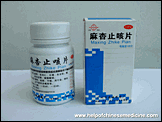
Ma Xing Zhi Ke Pian

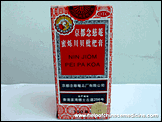
Chuan Bei Pi Pa Gao


 Ma Xing Zhi Ke Pian is a powerful herbal medicine that treat cough, bronchitis and asthma. The results of herbal therapy range from a complete remission of the disease to a much less frequent use of inhalers.

Ma Xing Zhi Ke Pian can also be used for cough due to heat, with sore throat, dry loud cough, or swollen glands.

Dosage:one time 3 tablets, 3 times per day
Contains 100 tablets
Manufacturer: Guangzhou Hua Cheng brand

Read more about Ma Xing Zhi Ke Pian

chinese medicine for cough
  
Buy
 
Ma Xing Zhi Ke Pian Online
 $3.95

 Chuan Bei Pi Pa Gao is a blend of 15 herbal ingredients, it helps to relieve cough and sore throat associated with common cold, influenza or similar ailments.
This soothing syrup is appropriate in cases of lung dryness that is due to wind heat, colds, or smoking.

Dosage: one table spoon a time, three times a day, bottle contains 150 ml
Manufacturer: Nin Jiom (Hong Kong)

Read more about Chuan Bei Pi Pa Gao


chinese medicine for cough
 
Buy
Chuan Bei Pi Pa Gao
 Online
$5.95

1.Chinese Medicine for  cardiovascular diseases, heart and blood vessels problems 
2.Chinese Medicine for gastro-intestinal disorders (poor appetite, indigestion, gastritis, diarrhea)
3.Chinese Medicine for men (prostatitis, impotence etc.)
4.Chinese Medicine for women (gynecological conditions,
pre-menstrual syndrome, infertility)

5.Chinese Medicine for liver syndromes (fatty liver, hepatitis,  cirrhosis)
6.Chinese Medicine skin diseases (swelling, eczema, psoriasis)

7.Chinese Medicine for asthma, bronchitis, chronic coughs
8.Chinese Medicine for rheumatism, arthritis, osteoarthritis
9.Chinese Medicine for hypertension
10.Chinese Medicine for allergies
11.Chinese Medicine for common cold and flu, sore throat
12.Chinese Medicine for pain relieve
13.Chinese Medicine for fatigue syndrome
14.Chinese Medicine for weight loss


Chinese medicine for asthma, coughs, bronchitis research
A strategy for discovering biologically active compounds with high probability in traditional Chinese herb remedies: An application of Saiboku-To(Chai Pu Tang) in bronchial asthma
Masato Hommaa, Kitaro Oka, a, , Tadashi Yamadaa, Tomoyuki Niitsumab, Hisao Ihtob and Noriyuki Takahashic
A novel strategy for discovering biologically active components in traditional Chinese herb remedies was performed from a pharmacokinetic view. The hypothesis was that the active compounds should appear in blood and urine with appropriate blood concentrations and urinary excretion rates after the administration of herbal-extract mixtures. In this research, we applied our procedures to Saiboku-To, one of the most popular Chinese herbal medicines in Japan. Consisting of 10 different plant extracts, it is used for the treatment of bronchial asthma. The analytical method adopted was a rapid-flow fractionation (RFF) for extraction-fractionation of lipophilic components in urine followed by silica-gel high-performance liquid chromatography (HPLC) equipped with a multichannel ultraviolet (uv) absorption detector. β--Glucuronidase-treated urine samples collected before and after the administration of Saiboku-To to healthy and asthmatic subjects were treated with the RFF apparatus to afford three pH-dependent fractions: strongly acidic (S), weakly acidic (W), and neutral (N). HPLC of these fractions, monitored by the multichannel uv detector, showed three new peaks in the postadministrative urine: one in the N fraction, two in the W fraction, and none in the S fraction. A compound in the N fraction was identified with authentic magnolol, a major component in Magnolia officinalis. Two compounds in the W fraction were identified by comparison with authentic samples as 8,9-dihydroxy-dihydromagnolol and liquiritigenin, metabolites previously isolated from M. officinalis and Glycyrrhiza glabra, respectively.

Traditional Chinese medicine an approach to scientific proof and clinical validation
Robert Yuan
The classical Chinese pharmacopoeia describes a large number of herbal formulations that are used for the treatment of a wide variety of diseases. This therapeutic approach is ignored by many and considered to be an alternative to conventional medicine by others. The scientific proof and clinical validation of these herbal formulations require a rigorous approach that includes chemical standardization, biological assays, animal models, and clinical trials. Such Western methodologies need to take into consideration the complex mixture of chemicals and how they are to be used in humans. This review examines relevant studies on the use of traditional Chinese medicines for the treatment of such diseases as bronchial asthma, atopic dermatitis, and irritable bowel syndrome. An interdisciplinary approach to traditional Chinese medicine may provide a platform for the discovery of novel therapeutics composed of multiple chemical compounds.

Ku-Shen (Sophora flavescens Ait), a single Chinese herb, abrogates airway hyperreactivity in a murine model of asthma*1
M. C. Wena, C. K. Huanga, K. D. Srivastavaa, T. F. Zhanga, B. Schofieldb, H. A. Sampsona and X. M. Lia
Ku-Shen (Sophora flavescens Ait) has been used for treating asthma in the practice of Traditional Chinese medicine (TCM) and Hawaiian herbal medicine. It is one of the major components in our anti-asthma herbal formula, MSSM-002. The purpose of this study was to investigate the pharmacological actions of Ku-Shen (KS) in a murine model of allergic asthma.
Methods
AKR/J mice (n=7-10 per group) were sensitized intraperitoneally twice and challenged 3 times intratracheally at 7-10 days intervals with conalbumin. KS was administered intragastrically 24 hours after the first challenge, and then twice daily for 17 days. The effects of KS on airway hyperreactivity (AHR), eosinophilic inflammation, IgE levels and Th2 production in vitro were determined.
Results
At the equivalent standard human adult dose, KS eliminated the development of AHR. Twice the usual dose (KS-2x) also significantly reduced airway inflammation as compared with the sham-treated group (13 ± 3 vs 43 ± 3%, p<0.01). Furthermore, serum IgE and Th2 cytokine levels (IL-4 and IL-5) in splenocyte cultures of KS-2x treated mice were significantly lower than the sham-treated group (p<0.01). No evidence of liver or kidney toxicity was observed at the doses used.
Conclusion
KS suppressed allergic airway responses, reduced inflammation and down-regulated Th2 responses. These findings lend support to the anecdotal findings of Hawaiian and TCM practice that KS is of value in the treatment of asthma. Further studies are required to determine whether KS alone or with other herbs can be a useful alternative or complementary therapy in modern asthma treatment.

Efficacy and tolerability of antiasthma herbal medicine intervention in adult patients with moderate-severe allergic asthma
Ming-Chun Wen MDa, , , Chun-Hua Wei MDa, Zhao-Qiu Hu MD, MSa, Kamal Srivastava MPhilb, Jimmy Ko MDb, Su-Ting Xi MD, MSa, Dong-Zhen Mu MD, MSd, Ji-Bin Du MDa, Guo-Hua Li MDa, Sylvan Wallenstein PhDc, Hugh Sampson MDb, Meyer Kattan MDb and Xiu-Min Li MDb, ,
Chinese herbal medicine has a long history of human use. A novel herbal formula, antiasthma herbal medicine intervention (ASHMI), has been shown to be an effective therapy in a murine model of allergic asthma.
Objective
This study was undertaken to compare the efficacy, safety, and immunomodulatory effects of ASHMI treatment in patients with moderate-severe, persistent asthma with prednisone therapy.
Methods
In a double-blind trial, 91 subjects underwent randomization. Forty-five subjects received oral ASHMI capsules and prednisone placebo tablets (ASHMI group) and 46 subjects received oral prednisone tablets and ASHMI placebo capsules (prednisone group) for 4 weeks. Spirometry measurements; symptom scores; side effects; and serum cortisol, cytokine, and IgE levels were evaluated before and after treatment.
Results
Posttreatment lung function was significantly improved in both groups as shown by increased FEV1 and peak expiratory flow findings (P < .001). The improvement was slightly but significantly greater in the prednisone group (P < .05). Clinical symptom scores, use of β2-bronchodilators, and serum IgE levels were reduced significantly, and to a similar degree in both groups (P < .001). TH2 cytokine levels were significantly reduced in both treated groups (P < .001) and were lower in the prednisone-treated group (P < .05). Serum IFN-γ and cortisol levels were significantly decreased in the prednisone group (P < .001) but significantly increased in the ASHMI group (P < .001). No severe side effects were observed in either group.
Conclusion
Antiasthma herbal medicine intervention appears to be a safe and effective alternative medicine for treating asthma. In contrast with prednisone, ASHMI had no adverse effect on adrenal function and had a beneficial effect on TH1 and TH2 balance.

Traditional Chinese herbal remedies for asthma and food allergy
Xiu-Min Li MD,
The increasing prevalence of allergic diseases in Westernized countries is a significant health problem. Curative therapies for these diseases are not available. There are also significant concerns regarding the potential side effects from the chronic use of conventional drugs such as corticosteroids, especially in children. Many patients with chronic allergic conditions seek complementary and alternative medicine therapies including traditional Chinese medicine for coughing. This trend has begun to attract interest from mainstream health care providers and scientific investigators and has stimulated government agencies in the United States to provide support and guidance for the scientific investigation of complementary and alternative medicine. This effort may lead to improved therapies and better health care/patient outcomes. This review presents an update on the most promising Chinese herbal remedies for asthma and food allergy.

Effects of Chinese herbs for replenishing shen and strengthening qi on some indexes of neuro-endocrino-immune network in asthmatic rats
Zhao FD, Dong JC, Xie JY.
Lab of Integrative Medicine for Lung, Inflammation and Cancers, Huashan Hospital, Fudan University, Shanghai.
OBJECTIVE: To study changes of several related indexes of neuro-endocrino-immune (NEI) network in rat asthma model, and to observe effects of epimedium herb (EH, a Chinese herb for replenishing Shen) and milkvetch root (MR, a Chinese herb for strengthening qi) on these indexes. METHODS: One hundred and twenty male healthy Brown Norway rats of clean grade were randomly divided into 11 groups. Their mRNA expression of corticoid release hormone (CRH) in hypothalamus was tested by Realtime-PCR, serum ACTH and CORT, IL-6, IL-4, IFN-gamma were detected with radioimmunoassay and enzyme-linked immunosorbent assay respectively and pathological changes of lung tissue were observed with hematoxylin and eosin stain. RESULTS: As compared with the normal group, mRNA expression of CRH in hypothalamic tissue, plasma ACTH and serum concentration of IFN-gamma not changed significantly, but serum level of CORT raised significantly and the pre-inflammatory factors IL-6 and IL-4 showed an increasing trend in the model rats. As compared with the model group, level of CRH mRNA expression in groups treated with low dose and moderate dose of both EH and the formula (HE and MR), IFN-gamma in group treated with moderate dose of EH and serum CORT in group treated with low dose of MR were higher, and serum levels of IL-4 and IL-6 in groups treated with high dose of MR were lower. CONCLUSION: Rats suffered from repeated asthmatic attack for three weeks had some disorders in indexes of NEI network. Chinese herbs for replenish Shen and strengthening qi could improve the function of hypothalamic-pituitary-adrenal axis and adjust the balance of Th1 and Th2 cytokines, which might be one of the mechanisms of Chinese herbs for treatment of repeated asthma attack.

An experimental serum pharmacological study on an application method in traditional Chinese medicine for treatment and prevention of asthma
Shen HF, Li YQ, Jin RM, Li H, Min L.
Department of Traditional Chinese Medicine, Renji Hospital, Medical College of Shanghai Jiao Tong University, Shanghai 200127, China.
OBJECTIVE: To study the mechanism of herbal application along meridians for treatment and prevention of asthma by using serum pharmacological test to observe the effects of serum containing herbs against the constriction of tracheal spiral strips induced by acetylcholine chloride (Ach). METHODS: Guinea pigs were randomly divided into normal control group, normal saline (NS) application group, aminophylline application group, aminophylline injection group, 1-day herb application group, 7-day herb application group and 14-day herb application group. Asthma was induced by Hutson's method in guinea pigs except the normal control group. Guinea pigs in herb application groups were treated by external application of a compound herbal medicine 60 min once every day. Guinea pigs in NS application group were treated by external application of NS. Guinea pigs in the two aminophylline-treated groups were treated by external application and intraperitoneal injection of aminophylline at a dose of 400 mg/kg, respectively. The guinea pigs were killed and the sera were obtained after 1-day, 7-day and 14-day treatment in the three herb application groups, 7-day treatment in the NS application group, the aminophylline application and injection groups, respectively. Serum pharmacological method was used to do the experiment, the effects of different sera on the constriction of tracheal strips were observed, and the constriction rates were calculated. RESULT: The serum containing herbs had an effect in reducing the constriction of tracheal spiral strips induced by Ach, and the effect was similar to that of the serum obtained from the aminophylline injection group. The constriction rate of the tracheal spiral strips was decreased when herbal application treatment was prolonged within a period of time, and it became stable when herbal application treatment was between 7-14 days. The constriction of tracheal spiral strips induced by Ach could be reduced remarkably when it was previously treated by serum containing herbs. CONCLUSION: The anti-acetylcholine function with a time-dependent effect is one of the mechanisms of herbal application treatment along meridians for asthma, and furthermore, herbal application treatment along meridians might be useful for preventing asthma.

Evaluation of efficacy of traditional Chinese medicines in the treatment of childhood bronchial asthma: clinical trial, immunological tests and animal study. Taiwan Asthma Study Group.
Hsieh KH.
Chang Gung Children's Hospital, Chang Gung Medical College, Taiwan, Republic of China.
Traditional Chinese medicines (TCM) have been used to treat bronchial asthma for several centuries and a certain degree of clinical benefit has been observed; however, scientific substantiation is lacking. A multicenter, double-blind and placebo-controlled study was therefore conducted to evaluate the clinical efficacy in terms of symptom score, medication score, morning and evening PEFRs, and changes of immunoregulatory function, such as distribution of lymphocyte subsets and in vivo and in vitro production of lymphokines (IFN-gamma and IL-4) and inflammatory mediators (histamine, PGE2 and LTC4). Furthermore, the protective effect of TCM on the late asthmatic reaction (LAR) was evaluated by using asthmatic guinea pigs. Three hundred and three asthmatic children were classified by Chinese doctors, according to a standardized questionnaire designed on the basis of basic logic of Chinese medicine, into three groups of specific constitution (group A, B and C). Group A consisted of 32 herb A-treated patients and 34 placebo-treated; group B, 74 herb B-treated and 64 placebo-treated; and group C, 55 herb C-treated and 44 placebo-treated. The study period was six months. The results were: 1) Both treatment group and placebo group showed an improvement in all clinical parameters, thus demonstrating a placebo effect. However, the improvement was usually greater in the former than the latter, although only the difference in PEFR was significant; 2) Herb A could increase total T cell and decrease B cell; 3) Herb A and B enhanced production of PGE2 but not LTC4, IFN-gamma and IL-4; 4) There was a general tendency for in vivo and in vitro production of histamine to decrease at the end of study in both treatment group and placebo group; however, the decrease was significantly greater in the former than the latter; 5) In asthmatic guinea pigs, 10-day's pretreatment with Chinese herbs could reverse the decrease of sGaw, suppress eosinophilia in bronchoalveolar lavage fluid (BALF), prevent the eosinophil infiltration of airways, increase PGE2 production and decrease LTC4 production in serum and BALF. Thus, traditional Chinese medicines did show a certain degree of clinical efficacy. The decreased production of histamine and LTC4, increased production of PGE2 that were found in both asthmatic children and asthmatic guinea pigs, and prevention of occurrence of LAR by suppressing eosinophil infiltration of airways and preserving airway conductance that were observed in asthmatic guinea pigs after allergen challenge might be used to account partly for the effectiveness.

Herbal treatments of asthma: a systematic review.
Singh BB, Khorsan R, Vinjamury SP, Der-Martirosian C, Kizhakkeveettil A, Anderson TM.
International Clinical Research Associates, Richmond, USA.
BACKGROUND: Asthma is a condition, often chronic, characterized by respiratory symptoms, variable airflow limitation and/or airway hyper-reactivity with symptoms causally related to family history, environmental influences, exposure to viruses and allergens as examples. The high economic burden associated with asthma is associated primarily with health care costs, missed work or school days. This systematic review was conducted to determine the study quality of articles investigating ayurvedic/collateral herbs, the effectiveness/efficacy and safety profile, as reported in the studies. METHODS: Literature searches were conducted using PubMed, EMBASE, Mantis, Ovid, Annotated Bibliography of Indian Medicine, and Cochrane library to identify published trials on herbal medicines for asthma of which Ayruvedic herbals are a subset. Randomized Controlled Trials (RCTs) and Quasi-Experimental Designs (QEDs) were included in this systematic review. The classic Jadad Scale, Singh RCT Scale with additional domains than Jadad, Safety Scoring Scale for clinical trials and the Singh QED Scale based on expanded features of QEDs were used to assess study quality. Herbs included in Traditional Chinese Medicine were excluded from this review. Forty-two articles were retrieved and 37 studies were ultimately reviewed utilizing 3 independent evaluators/1 arbitrator. RESULTS: Articles reviewed indicated benefit from most of the herbs used either as a primary or adjunctive treatment for Asthma. Study quality was mixed and therefore caution in interpretation of findings of usefulness of these herbals must be suggested. Limited safety information was mixed and generally was related to GI symptoms, though one herbal investigated reported more serious side effects. CONCLUSIONS: Herbs may be useful in treatment of asthma. There is insufficient evidence to make recommendations for or against the use of these herbals. Established effectiveness must be balanced with study quality and safety profile for the herb.

Here you can buy Chinese medicine for asthma, bronchitis, chronic coughs online

Site Map