




In severe cases there can be a systemic reaction by the body such as development of a fever, dizziness, difficulty in breathing, or irregular heartbeat. In such cases, immediate medical attention is warranted.
Shenyi Center of Chinese medicine has a variety of Chinese medicines for skin problems click here
- Chinese Medicine for cardiovascular diseases and heart
- Chinese Medicine for gastro-intestinal disorders (poor appetite, indigestion, gastritis, diarrhea)
- Chinese Medicine for men (prostatitis, impotence etc.)
- Chinese Medicine for women (gynecological conditions, pre-menstrual syndrome, infertility)
- Chinese Medicine for liver syndromes (fatty liver, hepatitis)
- Chinese Medicine skin diseases (swelling, eczema, psoriasis)
- Chinese Medicine for asthma, bronchitis, chronic coughs
- Chinese Medicine for rheumatism, arthritis, osteoarthritis
- Chinese Medicine for hypertension
- Chinese Medicine for allergies
- Chinese Medicine for common cold and flu, sore throat
- Chinese Medicine for pain relieve
- Chinese Medicine for fatigue syndrome
- Chinese Medicine for weight loss
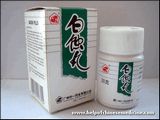
The de-pigmentation, especially localized and short-term, may be controlled after continuous administration of the pills for 2 to 3 months. Pharmacological study reveals no side and toxic effects.
Dosage: 2.5 grams (about 20 pills), 3 times per day, please read the instruction before use
Manufacturer: Guangzhou Zhongyi
Read more...
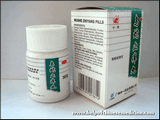
It is used for pruritic dermatoses such as essential pruritus, urticaria, pruritus vulvae, mainly for cases of eczema or urticaria attributive to endopathic wind due to blood deficiency Dosage 2.5 grams (about 20 pills), 3 times per day, contains 30 grams
Manufacturer: Guangzhou Zhongyi
Read more...
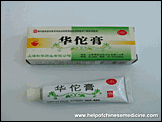
Wash the affected area with warm water and apply twice daily, Contains 8 g
Manufacturer: Shanghai Song Hua
Read more...
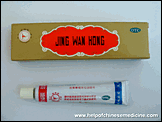
Apply the cream, then cover the burn with a dressing, change daily
Contains 20 g
Manufacturer: Tianjin Lerentang brand
Read more...
Traditional Chinese medicine in dermatology.
Koo J, Desai R.
Department of Dermatology, University of California, San Francisco, San Francisco, California 94143, USA.
Traditional Chinese medicine (TCM) is an alternative method of therapy that can be administered in oral, topical, or injectable forms. It emphasizes the importance of using many herbs that are combined in different formulations for each individual patient. Since it is not possible to discuss all applications of TCM in every skin disorder, psoriasis and atopic dermatitis are used as the prototypes in illustrating the use of TCM. A number of studies have shown the usefulness of TCM in the treatment of these skin conditions, and thus it is worthwhile for dermatologists throughout the West to gain some familiarity with this method. We attempt to provide a general overview of TCM through a discussion of efficacy, mechanisms of action, and side effects of various TCMs. A warning regarding the possible contamination of TCMs is also included. In the future, perhaps a better understanding of TCM will be gained through more systematic analysis and controlled studies with a placebo arm. It is our hope that this article will provide dermatologists with a more complete understanding of the role and ramifications of TCM therapy.
Chinese herbal medicine for atopic eczema.
Zhang W, Leonard T, Bath-Hextall F, Chambers CA, Lee C, Humphreys R, Williams HC.
Academic Rheumatology, University of Nottingham, Clinical Sciences Building, City Hospital, Nottingham, England, UK, NG5 1PB
BACKGROUND: Traditional Chinese herbal mixtures have been used to treat atopic eczema for many years. Their efficacy has attracted public attention and recently some clinical trials have been undertaken. OBJECTIVES: To assess the effects of Chinese herbal mixtures in the treatment of atopic eczema. SEARCH STRATEGY: We searched the Cochrane Central Register of Controlled Trials (CENTRAL) ( January 2004), the Cochrane Skin Group Specialised Register (January 2004), MEDLINE (1966 to January 2004), EMBASE (1980 to January 2004), CINHL (1980 to January 2004) and a number of complementary medicine databases. In addition, the cited references of all trials identified and key review articles were searched. Pharmaceutical companies involved in oral traditional Chinese herbs and experts in the field were contacted. SELECTION CRITERIA: Randomised controlled trials of Chinese herbal mixtures used in the treatment of atopic eczema. DATA COLLECTION AND ANALYSIS: Two reviewers independently applied eligibility criteria, assessed the quality of the trials and extracted data. Any discrepancies were discussed to achieve consensus. MAIN RESULTS: Four randomised controlled trials, with eight weeks for each phase, met the inclusion criteria. The trials randomised 159 participants aged from 1 to 60 years. The withdrawal rates ranged from 7.5% to 22.5% and no trial used intention to treat analysis. Three trials were randomised placebo controlled, two-phase cross-over designs assessing the same Chinese herbal mixture, Zemaphyte. In two of these three trials the reduction in erythema and surface damage was greater on Zemaphyte than on placebo, and participants slept better and expressed a preference for Zemaphyte. One trial also reported that participants itched less. The fourth trial was an open-label design comparing Zemaphyte in herbal form with Zemaphyte as a freeze dried preparation. There was a reduction in erythema and surface damage with both formulations, but no comparison between the two formulations was reported. Some adverse effects were reported in all four trials, but none were regarded as serious. AUTHORS' CONCLUSIONS: Chinese herbal mixtures may be effective in the treatment of atopic eczema. However, only four small poorly reported RCTs of the same product, Zemaphyte, were found and the results were heterogeneous. Further well-designed, larger scale trials are required, but Zemaphyte is no longer being manufactured.
Study on treatment of eczema by Chinese herbal medicine with anti-type IV allergic activity
Lin X, Tu C, Yang C.
Institute of Dermatology, Dalian Medical University, Liaoning (116011).
OBJECTIVE: To study Chinese herbal prescription for treatment of eczema based on the suppressive effect of Chinese herbal medicine on type IV allergic reaction. METHODS: Various formulae composed of Chinese herbal medicines possessing suppressive effect on allergic contact dermatitis were formed based on the therapeutic principles of traditional Chinese medicine in treating eczema, and their effect on murine ear swelling, ear flake weight, dermal inflammatory infiltration cell count and plasma level of calcitonin gene related peptide (CGRP) were examined in mice with dinitrofluorobenzene induced dermatitis. A prescription, Composite Poria Decoction was formulated and made into granule form, which was used to treat 63 cases of eczema (atopic dermatitis was excluded), and compared with 59 cases treated with antihistamine that was aimed at the type I allergic reaction. RESULTS: Experimental study showed that all the 4 Chinese prescriptions had the effect of anti-type IV allergic reaction, among them, the formula for cooling blood, remove Heat, Wind and Dampness evil possessed the most potent effect in suppressing murine dermatitis, and it was also able to up-regulate the plasma CGRP concentration. The clinical cure rate of Composite Poria Granule treatment was 47.6%, and that of control was 22.0%, the difference was significant between the two groups (u = 2.9555, P < 0.01). CONCLUSIONS: Chinese herbal medicine has effect of anti-type IV allergic reaction. Composite Poria Granule has good effect in treating eczema.
Evaluation of the anti-proliferative properties of selected psoriasis-treating Chinese medicines on cultured HaCaT cells.
Tse WP, Che CT, Liu K, Lin ZX.
School of Chinese Medicine, Faculty of Science, The Chinese University of Hong Kong, Shatin, N.T., Hong Kong SAR, China.
Psoriasis is a chronic inflammatory skin disorder, which affects approximately 2-3% of the population worldwide. The current conventional therapy cannot offer satisfactory clinical results for most of the patients, largely due to the fact that many anti-psoriatic drugs have serious side effects and psoriasis is prone to developing drug resistance after long term exposure. Traditionally, Chinese herbal medicine has been extensively used to treat psoriasis and produced promising clinical results; however, its underlying mechanisms of action have not been systematically investigated. The aim of this study was to investigate those Chinese medicinal materials, which are commonly prescribed in Chinese medicine practice for psoriasis, for their anti-proliferative effects on HaCaT cells in vitro. Sixty Chinese medicinal materials were selected and extracted with 80% aqueous ethanol. The dry extracts were evaluated for their anti-proliferative activities by microplate SRB and MTT assays. Three Chinese medicinal materials i.e. the root of Rubia cordifolia L. (Rubiaceae), Realgar and the rhizome of Coptis chinensis Franch. (Ranunculaceae) were found to have significant anti-proliferative effects, with IC(50) being 1.4, 6.6 and 23.4 microg/ml, respectively as measured by MTT assay. While Realgar was also able to modestly inhibit the growth of Hs-68 cells in vitro, Rubia cordifolia and Coptis chinensis did not exert cytotoxicity to this human fibroblast cell line.
The antioxidant activity of Chinese herbs for eczema and of placebo herbs
Andrew J. Kirby and Richard J. Schmidt,
Welsh School of Pharmacy, University of Wales — Cardiff (UWC), Redwood Building, King Edward VII Avenue, Cardiff, CF1 3XF, UK
A standardized mixture of Chinese herbs has recently been demonstrated to be an effective treatment for chronic atopic eczema in placebo controlled trials in the UK. Aqueous decoctions of this formulated mixture (PSE 222), the placebo mixture, and their component herbs were examined for antioxidant activity to determine whether antioxidant activity could account for the anti-eczema activity. Two measures of antioxidant activity were employed: the DPPH assay for non-specific hydrogen atom (or electron) donating activity and a superoxide scavenging assay. Antioxidant activity was detected in some components of both the active and placebo mixtures, but the formulated active mixture (PSE 222) was significantly more effective than the formulated placebo mixture. Further studies are needed to elucidate the in vivo significance of this result.
Evaluation of the anti-proliferative properties of selected psoriasis-treating Chinese medicines on cultured HaCaT cells
Wai-Pui Tsea, Chun-Tao Chea, Ken Liub and Zhi-Xiu Lina, ,
aSchool of Chinese Medicine, Faculty of Science, The Chinese University of Hong Kong, Shatin, N.T., Hong Kong SAR, China
bDepartment of Anatomy, Faculty of Medicine, The Chinese University of Hong Kong, Shatin, N.T., Hong Kong SAR, China
Psoriasis is a chronic inflammatory skin disorder, which affects approximately 2–3% of the population worldwide. The current conventional therapy cannot offer satisfactory clinical results for most of the patients, largely due to the fact that many anti-psoriatic drugs have serious side effects and psoriasis is prone to developing drug resistance after long term exposure. Traditionally, Chinese herbal medicine has been extensively used to treat psoriasis and produced promising clinical results; however, its underlying mechanisms of action have not been systematically investigated. The aim of this study was to investigate those Chinese medicinal materials, which are commonly prescribed in Chinese medicine practice for psoriasis, for their anti-proliferative effects on HaCaT cells in vitro. Sixty Chinese medicinal materials were selected and extracted with 80% aqueous ethanol. The dry extracts were evaluated for their anti-proliferative activities by microplate SRB and MTT assays. Three Chinese medicinal materials i.e. the root of Rubia cordifolia L. (Rubiaceae), Realgar and the rhizome of Coptis chinensis Franch. (Ranunculaceae) were found to have significant anti-proliferative effects, with IC50 being 1.4, 6.6 and 23.4 μg/ml, respectively as measured by MTT assay. While Realgar was also able to modestly inhibit the growth of Hs-68 cells in vitro, Rubia cordifolia and Coptis chinensis did not exert cytotoxicity to this human fibroblast cell line.
Traditional Chinese medicine for the treatment of dermatologic disorders.
Koo J, Arain S.
Psoriasis Treatment Center, University of California, San Francisco, USA.
Traditional Chinese medicine (TCM) is an alternative method of therapy that can be administered in oral, topical, or injectable forms. It emphasizes the importance of using many herbs that are combined in different formulations for each individual patient. Among some segments of the patient population, it has become increasingly popular as a mode for treating dermatologic diseases. As a result, it is now worthwhile for dermatologists throughout the West to gain some familiarity with this method. Yet, dermatologists are largely unfamiliar with TCM and may possess some misconceptions. We attempt to give a general overview of TCM through the discussion of different clinical studies involving various TCMs. Some proposed mechanisms of action of TCM are also presented. A discussion of adverse effects, including hepatotoxic effects and the need for close monitoring is discussed. A warning regarding the possible contamination of TCMs is also included. Since it is not possible to discuss the application of TCM for every skin disorder, psoriasis and atopic dermatitis are used as the prototype in illustrating the use of TCM. In the future, perhaps a better understanding of TCM will be gained through more systematic analysis and controlled studies with a placebo arm.
Here you can buy Chinese medicine for skin (burns, swelling, eczema, psoriasis)
