




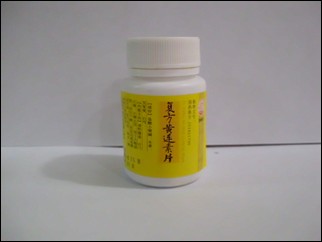
The extract is prepared from the rhizome of Coptis chinensis (huang lian), and the active ingredient is berberine, a powerful constituent with strong antibiotic effects. Also found in North American goldenseal and Oregon grape, berberine gives these pills their beautiful golden color.
Huang Lian Su has strong effects, inhibiting the bacteria that cause strep throat, pneumonia, and dysentery.
Research in China has shown this herb to have similar action to a broad spectrum antibiotic. Clinical trials have proved it is effective in treating influenza, pertussis, typhoid, tuberculosis, scarlet fever, and diphtheria.
As this list of conditions illustrates, this Chinese medicine for diarrhea is highly developed and is used by practitioners to treat serious disease as well as minor ailments. This formula should not be used for diarrhea due to deficient cold conditions.
The next time you travel, consider packing Traditional Huang Lian Su Pian to relieve symptoms of traveler's diarrhea.
We can guarantee that the natural products from ShenYi Center of Chinese Medicine are 100% authentic and our prices are competitive in comparison to other herbal stores.
We ship via Hong Kong post.
Paypal and credit cards accepted. Most of the orders areshipped within 24 hours.
Please contact us for any enquiries:
info (at) helpofchinesemedicine.com


- Chinese Medicine for cardiovascular diseases and heart
- Chinese Medicine for gastro-intestinal disorders (poor appetite, indigestion, gastritis, diarrhea)
- Chinese Medicine for men (prostatitis, impotence etc.)
- Chinese Medicine for women (gynecological conditions, pre-menstrual syndrome, infertility)
- Chinese Medicine for liver syndromes (fatty liver, hepatitis)
- Chinese Medicine skin diseases (swelling, eczema, psoriasis)
- Chinese Medicine for asthma, bronchitis, chronic coughs
- Chinese Medicine for rheumatism, arthritis, osteoarthritis
- Chinese Medicine for hypertension
- Chinese Medicine for allergies
- Chinese Medicine for common cold and flu, sore throat
- Chinese Medicine for pain relieve
- Chinese Medicine for fatigue syndrome
- Chinese Medicine for weight loss
TREATMENT OF INFANT DIARRHEA IN AUTUMN WITH SHUANG HUANG LIAN POWDER-INJECTION BY RETENTION-ENEMA LIU Yanling
Journal of Shandong University of Traditional Chinese Medicine 2000
Determination of the Content of Hydrochloride Berberine in Rhizoma Coptidis
Shanghai Journal of Traditional Chinese Medicine 2003 In vitro inhibition of coronavirus replications by the traditionally used medicinal herbal extracts, Cimicifuga rhizoma, Meliae cortex, Coptidis rhizoma, and Phellodendron cortex.
Kim HY, Shin HS, Park H, Kim YC, Yun YG, Park S, Shin HJ, Kim K.
Department of Microbiology, Ajou University School of Medicine, Suwon, South Korea.
BACKGROUND: A search for new anti-coronaviral drugs to treat coronaviral infections was motivated by an outbreak of severe acute respiratory syndrome (SARS). OBJECTIVES: In order to find drugs that treat coronavirus infections, including SARS, we screened traditional medicinal herbal extracts and evaluated their antiviral activities on coronavirus replication. STUDY DESIGN: We employed a plaque assay to evaluate the effect of 22 medicinal herbal extracts on virus replication. We determined the 50% effective concentration (EC50) of each extract that was necessary to inhibit the replication of mouse hepatitis virus A59 (MHV-A59); we also determined 50% cytotoxic concentrations (CC50) for each extract. Northern and Western blot analyzes were performed to investigate antiviral activity in MHV-infected DBT cells, including virus entry, viral RNA and protein expression, and virus release. Coronavirus specific inhibition was also demonstrated using porcine epidemic diarrhea virus (PEDV). RESULTS: Cimicifuga rhizoma, Meliae cortex, Coptidis rhizoma, Phellodendron cortex and Sophora subprostrata radix decreased the MHV production and the intracellular viral RNA and protein expression with EC50 values ranging from 2.0 to 27.5 microg/ml. These extracts also significantly decreased PEDV production and less dramatically decreased vesicular stomatitis virus (VSV) production in vitro. CONCLUSIONS: The extracts selected strongly inhibited MHV replication and could be potential candidates for new anti-coronavirus drugs.
This is the page of Chinese medicine for diarrhea, you can buy Huang Lian Su Pian online here.
